4min read
Checking whether a phone number and website still work
Verifying a list before writing to it looks like wasted time. What can be checked automatically, what cannot, and what each failure says about the business.
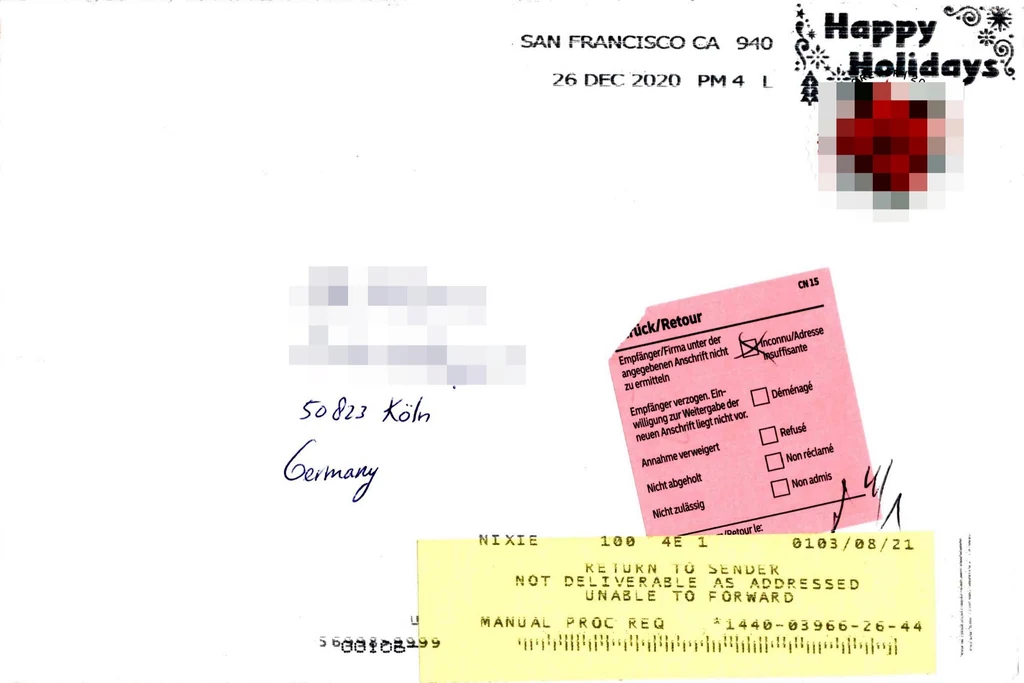

You wrote to thirty businesses, nine emails bounced, four numbers were disconnected. What you lost is not only time: bounces pull down the reputation of the address you send from.
What can be checked automatically
Some fields on a list can be checked without bothering anyone.
Does the domain resolve. A DNS query tells you the domain is still registered and pointed somewhere. A domain that doesn’t resolve marks the oldest records on your list, and the other fields sitting next to it are usually the same age.
Does the site respond. A HEAD request is enough; there is no need to download the page. The thing to get right here is reading the status code. 200 means it works, 301 means it moved somewhere else, and where it moved is often interesting information. 403 means the site is blocking you, not that it is down.
Email format and whether the domain accepts mail. With no MX record on the domain, no email reaches that address at all. That single check removes a meaningful share of your future bounces.
The shape of the phone number. Country code, digit count, and whether the area code is one that exists. Checks you can do without dialling end there.
What cannot
You cannot know whether an email address really accepts delivery without sending to it. Verification services guess: they connect to the server and ask about the address, and plenty of servers now answer yes to everything.
The same holds for phones. You cannot learn whether a line is live without calling it, and dialling automatically both bothers the business and does not count as verification.
What you can do on those two fields is reduce risk. Start with a small batch and watch the bounce rate; it tells you about the rest of the list. Three bounces in the first twenty sends means the list has aged systematically.
Failures are signals
Don’t delete bounces, read them. What the receiving server says carries information about the business.
A permanent failure says the address no longer exists. The right move for that record is not to drop it but to change channel: the phone may still be live. A temporary failure means a full mailbox or a busy server, and can be retried in a few days. A failure saying the domain cannot be found tells you the business has abandoned its site, and that is actually an opportunity signal.
There is a similar reading on the web side. A site with an expired certificate loads and shows a browser warning; it is losing visitors and may not know. That is one of the few findings you can point at concretely in a first message.
The order to check in
Ordering the checks from cheap to expensive halves the time.
- Format checks. They take seconds and shorten the list noticeably.
- DNS and
MXqueries. They need the network but are fast and bother nobody. - A request to the site. Slower; run it only on records that survived the first two.
- Looking with your own eyes. Only for records you are actually going to write to.
Applying step four to the whole list is what turns this work into drudgery. On a list already down to thirty records, two minutes of looking also decides what your message will say.
Freshness is a range, not a date
A verified list does not stay verified. How fast a local business list ages depends on the sector: a few months for cafés and restaurants, a year for accountants and plumbers.
The practical rule is to write the verification date next to the record and act on it. A number verified three months ago gets a quick check before you call; one verified three days ago you just dial. A list with no dates keeps being read with the confidence of its first day, and that confidence gets a little more wrong every week.
Related posts

Mapping the fields when a list moves into a CRM
A single CSV import can destroy months of collected context beyond recovery. Five fields that need a decision before the list is moved anywhere.

How to spot a business that has already closed
A closed business does not vanish from the map and still looks live on your list. Four signals you can gather at a distance, and why none of them stands alone.
How complete is OpenStreetMap coverage for a district
Without knowing how many businesses the map is missing, the size of a list means nothing. Estimating coverage by sampling, and where the gaps are systematic.